After the hail,
before the panic.
A documented roof-level inspection, a straight answer about whether a claim makes sense, and — when it does — the paperwork, the adjuster meeting, and the rebuild handled end to end.
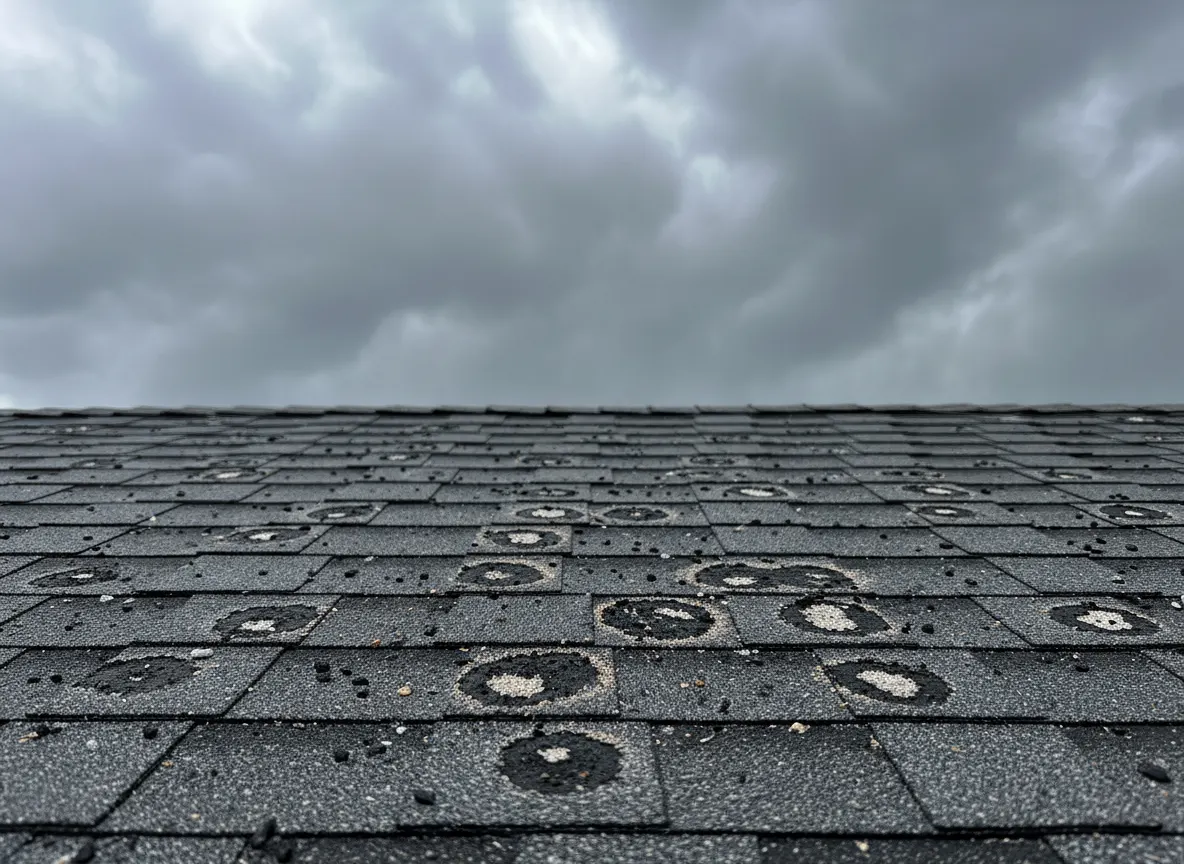
The damage you can't see from the driveway.
Hail rarely punches visible holes. It bruises the mat, knocks granules loose, and opens the door to slow leaks that show up months later as ceiling stains. By then, the claim window may be closing — most policies expect storm claims within a year of the storm date.
Asphalt shingles
Bruised mats and granule loss that accelerate aging — the most common Front Range damage pattern.
Metal & vents
Dents on vents, flashing, and gutters — often the first visible clue the shingles took hits too.
The water path
Gutters and downspouts dented out of pitch stop moving water where it should go.
We document. You decide.
Our job is to put the facts in front of you and your insurer in the format adjusters actually work from — photos, measurements, line-item scope. If the damage doesn't justify a claim, we say so plainly and you keep the report.
Photo report
Every slope, penetration, and accessory documented at roof level.
Claim scope
Line-item scope of loss in industry-standard format, ready for your carrier.
Adjuster meeting
We can be on the roof with your adjuster so nothing gets missed or argued later.
Whether to file is always your decision. We don't pressure claims, we don't negotiate your policy, and we recommend talking timelines with your agent — many policies require storm claims within one year.
Storm-season realities.
Crews knocked on my door right after the storm. Now what?
Storm-chasing crews arrive fast and leave faster. Don't sign anything on the doorstep — get the roof documented first by a company that will still be in town next season, then decide with the facts in hand.
Will a claim raise my rates?
That's between you and your carrier — rate effects vary by policy and by how many storms hit your area. What we can do is make sure the decision is based on documented damage, not a guess.
What if only one slope took damage?
Sometimes a repair or partial replacement is the right call, and that's what we'll recommend. The report shows slope-by-slope findings so the scope matches the damage.